
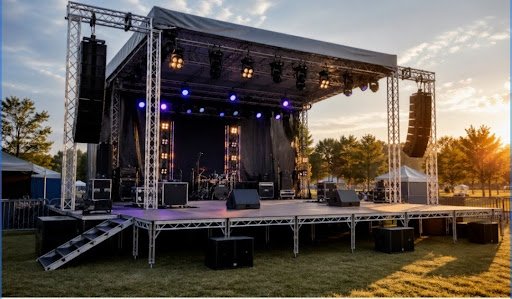
Selecting the right staging solution can define the success or failure of an event. Whether you are planning a live performance, corporate gathering, school function, or community festival, the structure you choose must balance practicality, safety, and presentation.
Many event planners today face a common decision: how to build a reliable concert stage using a portable stage system that meets both functional and aesthetic demands. While the flexibility of modular staging has made it increasingly popular, choosing the right system requires a careful evaluation of several interrelated factors.
This guide provides a comprehensive, objective look at what matters most when selecting a staging system, along with the trade-offs and challenges that come with different approaches.
Understanding the Purpose of Your Stage Setup
Before comparing materials, sizes, or configurations, it’s important to define the primary purpose of the stage. Not all events have the same requirements, and a mismatch between purpose and structure can lead to inefficiencies or safety risks.
For example, a live music performance typically requires a sturdy platform capable of supporting heavy equipment such as amplifiers, drum kits, and lighting rigs. In contrast, a corporate presentation may prioritize aesthetics and ease of setup over load capacity. Similarly, outdoor events introduce additional variables such as uneven terrain, weather exposure, and anchoring requirements.
The challenge here lies in anticipating future use cases. Many buyers aim for versatility, but highly adaptable systems can sometimes compromise on specialized performance. A system designed for maximum flexibility may not offer the same rigidity or load-bearing strength as one built specifically for large-scale performances.
Size and Configuration: Balancing Flexibility and Stability
One of the most critical factors is determining the appropriate size and layout. Modular platforms are typically built using standardized deck units, allowing users to expand or reduce the setup as needed. This flexibility is a major advantage, especially for event planners handling multiple event types.
However, scalability introduces trade-offs. Larger configurations require more connectors, supports, and leveling adjustments, which can increase setup complexity. While a smaller platform is easier to assemble and transport, it may not provide enough space for performers, equipment, or movement.
Another consideration is stage height. Elevated platforms improve visibility for audiences but require additional safety features such as guardrails and steps. Lower platforms are easier to manage but may limit audience engagement, particularly in crowded environments.
Choosing the right configuration involves balancing:
- Audience size and viewing angles
- Performer movement and equipment needs
- Setup time and labor availability
The key challenge is predicting how often you will need to scale up or down and selecting a system that accommodates those changes without becoming cumbersome.
Material and Build Quality: Durability vs Portability
The materials used in staging systems significantly impact both performance and usability. Most modular platforms are constructed using aluminum frames with plywood or composite surfaces. Aluminum is lightweight and resistant to corrosion, making it ideal for transport and outdoor use.
However, lighter materials can sometimes raise concerns about durability and load capacity. Heavier-duty systems, while more robust, are often harder to transport and require more manpower to assemble. This creates a clear trade-off between portability and strength.
Surface material is another important factor. Non-slip finishes are essential for safety, especially in outdoor conditions or high-energy performances. At the same time, premium surface coatings can increase costs and maintenance requirements.
The challenge here is finding a balance between:
- Long-term durability
- Ease of handling and transport
- Safety under varying conditions
A system that is too lightweight may compromise stability, while one that is too heavy can reduce efficiency and increase operational costs.
Load Capacity and Structural Integrity
Load capacity is often overlooked until it becomes a problem. Each platform unit has a specified weight limit, and exceeding it can lead to structural failure. For performance events, this includes not just the performers but also instruments, speakers, lighting rigs, and dynamic movement.
Higher load capacities typically require reinforced frames and additional supports. While this increases safety, it also adds weight and complexity. For smaller events, such heavy-duty systems may be unnecessary and inefficient.
Another consideration is weight distribution. Even if the total load is within limits, uneven distribution can create stress points. Modular systems must be assembled correctly to ensure even support across the entire structure.
The trade-off here is clear:
- Higher capacity systems offer greater safety margins
- Lower capacity systems are easier to handle and more cost-effective
The challenge is accurately estimating your typical load requirements and choosing a system that meets them without over-engineering.
Ease of Setup and Labor Efficiency
Time is a critical factor in event planning. Systems that require tools, specialized skills, or large crews can significantly increase setup time and costs. Modern modular platforms often emphasize tool-free assembly, allowing users to connect units quickly and efficiently.
However, ease of setup can sometimes come at the expense of customization. Highly simplified systems may offer fewer configuration options or reduced structural rigidity compared to more complex setups.
Labor efficiency also depends on the number of components. A system with many small units may be easier to transport but slower to assemble. Conversely, larger units reduce assembly time but may require more effort to handle.
The trade-offs include:
- Faster setup vs greater customization
- Fewer components vs easier transport
- Reduced labor vs structural complexity
The challenge is selecting a system that aligns with your team’s capabilities and the time constraints of your events.
Portability and Storage Considerations
One of the main advantages of modular staging is its portability. Systems designed for transport typically feature foldable legs, stackable decks, and lightweight materials. This makes them ideal for event companies that operate in multiple locations.
However, portability introduces storage challenges. Even compact systems require dedicated storage space, and improper storage can lead to damage over time. Additionally, frequent transportation increases wear and tear, especially on connectors and locking mechanisms.
Another factor is transportation logistics. Larger systems may require trucks or specialized vehicles, while smaller systems can be transported in standard vans.
The trade-off here is between:
- Ease of transport and storage
- Longevity and durability
- Compact design vs structural robustness
Choosing the right system involves considering not just how it will be used, but also how it will be stored and transported between events.
Safety Features and Compliance
Safety should never be compromised when selecting a staging system. Key safety features include:
- Non-slip surfaces
- Secure locking mechanisms
- Guardrails for elevated platforms
- Stable leg structures with leveling adjustments
Compliance with safety standards and regulations is also essential, particularly for public events. While higher safety standards often increase costs, they reduce the risk of accidents and liability.
The challenge lies in balancing cost with safety. Lower-cost systems may lack advanced safety features, while premium systems may include features that are unnecessary for smaller events.
Ultimately, the decision should prioritize the well-being of performers and audiences while remaining practical for your specific use case.
Cost vs Long-Term Value
Budget is often a deciding factor, but focusing solely on initial cost can be misleading. A cheaper system may save money upfront but require frequent repairs, replacements, or additional labor.
On the other hand, investing in a high-quality system can provide long-term savings through durability, efficiency, and versatility. The key is to evaluate total cost of ownership rather than just purchase price.
Factors to consider include:
- Maintenance and repair costs
- Lifespan of materials
- Labor savings from easier setup
- Versatility across different events
The trade-off is between short-term affordability and long-term value. The challenge is determining how often the system will be used and whether the investment will pay off over time.
Aesthetic and Professional Presentation
While functionality is critical, visual appeal also plays a significant role in event success. A well-designed platform enhances the overall experience and contributes to audience engagement.
Modular systems often offer accessories such as skirting, backdrops, and lighting integration. However, adding these features can increase complexity and cost.
The challenge is balancing aesthetics with practicality. A highly polished appearance may require additional setup time and resources, while a simpler design may lack visual impact.
Environmental and Contextual Impact
An often-overlooked aspect of staging decisions is the broader impact of your choices. This includes environmental considerations, such as the sustainability of materials and the carbon footprint of transportation.
Aluminum systems are generally recyclable, making them a more sustainable option. However, frequent transportation and large-scale setups can increase environmental impact.
Contextual impact is also important. For example:
- Outdoor events require weather-resistant materials
- Indoor venues may have space and flooring restrictions
- Community events may prioritize accessibility and inclusivity
The challenge is aligning your staging choice with both environmental responsibility and the specific context of your events.
Common Challenges in Decision-Making
Choosing the right system is rarely straightforward. Some common challenges include:
- Overestimating or underestimating size requirements
- Balancing portability with durability
- Managing budget constraints while ensuring safety
- Adapting to different event environments
Each decision involves trade-offs, and there is no one-size-fits-all solution. The best approach is to prioritize your most critical needs and select a system that aligns with them.
Final Thoughts
Selecting the right staging solution requires a careful balance of multiple factors, including size, material, load capacity, portability, safety, and cost. Each factor influences the others, creating a complex decision-making process that depends on your specific needs and priorities.
Rather than focusing on a single feature, it is essential to take a holistic approach. Consider how the system will be used, who will handle it, and how it will perform over time. By understanding the trade-offs and challenges involved, you can make an informed decision that supports both operational efficiency and event success.
In the end, the right choice is not just about meeting immediate requirements but also about creating a reliable, adaptable foundation for future events.
