
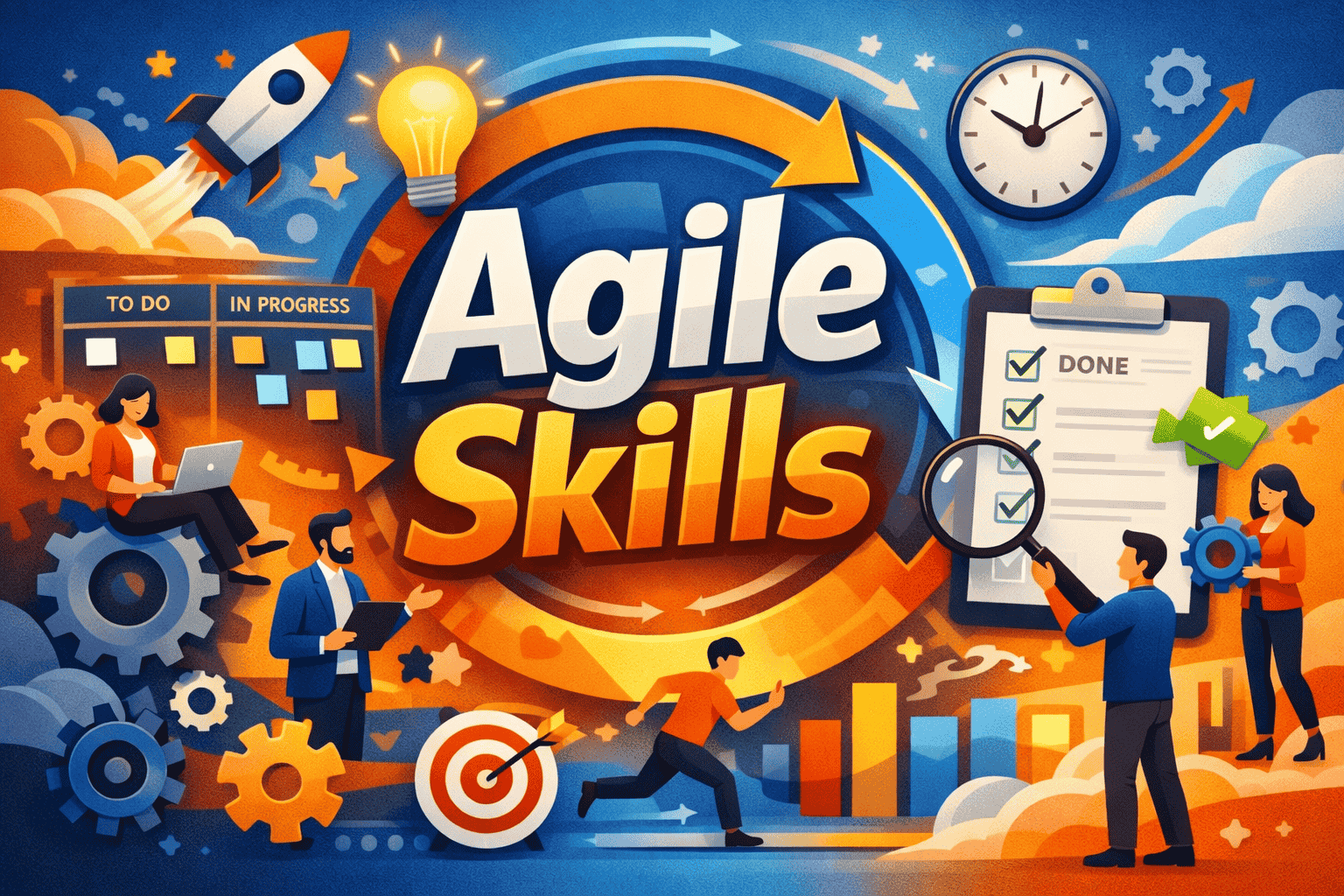
Many People misconceptualize Agile as limited to software engineering; that’s wrong. Today, it is a core way of working across industries like product management, marketing, operations, HR, and finance. Organizations expect professionals to respond quickly to change, collaborate effectively, and deliver real value faster. Agile skills make this possible by combining mindset, methods, and people-focused capabilities.
According to Scrum Alliance and the Business Agility Institute, research shows that over 70% of organizations now use Agile practices in some form, and teams with strong Agile skills report faster delivery and higher customer satisfaction. With more complex and uncertain work areas, Agile skills are becoming essential career skills. In this article, we explore the top 20 Agile Skills that every professional should know.
What is Agile?
Agile means being flexible and ready for change.
It’s about adjusting quickly when things don’t go as planned and finding better ways to move forward, especially in uncertain situations.
Why Agile Skills Are Necessary in Today’s Workplace:
Modern workplaces demand speed, flexibility, and customer focus.
Agile skills help professionals:
- Adapt to frequent changes
- Deliver results faster
- Improve teamwork and communication
- Focus on customer value
- Build a mindset of continuous improvement
Nowadays, Organizations no longer use traditional rigid plans. They switch to the path of learning, flexibility, and collaboration.
The 20 Essential Agile Skills Every Professional Needs

I. Agile Foundational Skills
These are the core mindsets and principles that guide Agile thinking.
1. Agile Mindset
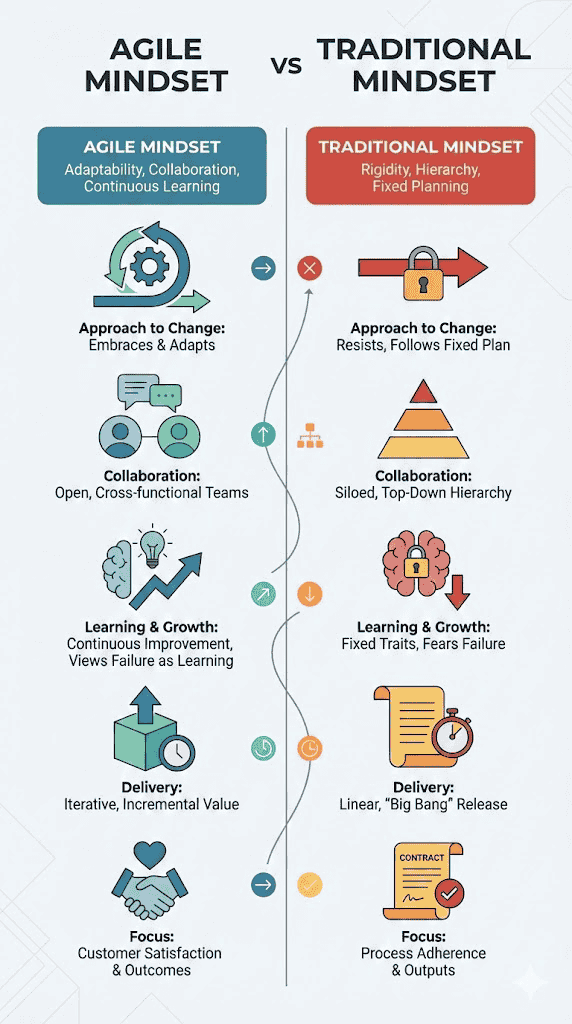
An Agile mindset is the foundation of all Agile skills. It focuses on learning, collaboration, and delivering value instead of blindly following processes.
How to Develop These Skills:
- Start by accepting change as a normal part of daily work.
- Build the habit of continuous learning by regularly reviewing feedback, results, and lessons learned from both successes and failures.
- Shift your focus from activities to outcomes and value delivered.
2. Understanding Agile Principles
Agile principles guide how professionals think, decide, and act in uncertain environments. They help teams prioritize individuals, collaboration, and customer value.
How to Develop These Skills:
- Read and understand the Agile Manifesto and its principles.
- Apply Agile values when making daily work decisions.
- Reflect on how well principles were followed during reviews or retrospectives.
3. Adaptability and Flexibility
Adaptability helps professionals respond effectively to change.
How to Develop These Skills:
- Stay open to shifting priorities.
- Experiment with new approaches.
- Review outcomes and adapt quickly.
4. Customer-Centric Thinking
Customer focus ensures work delivers real value.
How to Develop These Skills:
- Seek customer feedback regularly.
- Validate assumptions early.
- Measure success through customer outcomes.
II. Product & Delivery Skills
These are Skills focused on defining, prioritizing, and delivering value.
5. Product Backlog Management
Effective backlog management ensures teams focus on the most valuable work first.
How to Develop These Skills:
- Prioritize backlog items based on business value and risk.
- Break large items into smaller, manageable pieces.
- Collaborate with stakeholders during regular backlog refinement.
6. User Story Writing
User stories clearly describe what needs to be built and why it matters to users.
How to Develop These Skills:
- Write stories from the user’s perspective.
- Keep stories small, clear, and focused.
- Define acceptance criteria before development begins.
7. Estimation and Planning
Agile estimation supports realistic planning without overcommitment.
How to Develop These Skills:
- Use simple estimation techniques like story points.
- Plan work based on actual team capacity.
- Revisit and adjust plans as new information emerges.
8. Risk Management
Agile manages risk through early visibility and action.
How to Develop These Skills:
- Identify risks early in the process.
- Use spikes to explore unknowns.
- Review risks regularly.
III. Technical and Execution Skills
These are the Skills that support workflow, execution, and delivery efficiency.
9. Scrum Framework Knowledge
Scrum provides a lightweight structure that enables teams to work effectively while staying flexible.
How to Develop These Skills:
- Learn Scrum roles, events, and artifacts clearly.
- Participate actively in sprint planning, reviews, and retrospectives.
- Use Scrum artifacts consistently to maintain transparency.
10. Kanban and Flow Management
Kanban focuses on visualizing work and improving flow to reduce delays and overload.
How to Develop These Skills:
- Visualize work using a simple Kanban board.
- Limit work in progress to avoid multitasking.
- Review workflow regularly to identify and remove bottlenecks.
11. Agile Tools Proficiency
Agile tools are used for better transparency and collaboration.
How to Develop These Skills:
- Learn one Agile tool deeply.
- Use tools to support workflow and visibility.
- Keep boards and data updated.
IV. Collaboration and Leadership Skills
Below are listed People-focused skills that enable teamwork and leadership.
12. Facilitation Skills
Facilitation ensures Agile meetings are productive and outcome-focused.
How to Develop These Skills:
- Prepare clear objectives for every meeting.
- Encourage participation from all team members.
- Keep discussions timeboxed and goal-oriented.
13. Collaboration and Teamwork
Agile thrives on strong collaboration and shared ownership.
How to Develop These Skills:
- Encourage cross-functional teamwork.
- Share knowledge openly and frequently.
- Support collective decision-making.
14. Communication Skills
Clear communication builds trust and alignment across teams.
How to Develop These Skills:
- Practice active listening during discussions.
- Communicate ideas clearly and simply.
- Share progress, risks, and blockers transparently.
15. Emotional Intelligence
Emotional intelligence improves teamwork and leadership.
How to Develop These Skills:
- Build self-awareness through reflection.
- Practice empathy in daily interactions.
- Manage stress and emotions constructively.
16. Servant Leadership
Servant leadership empowers teams to perform at their best.
How to Develop These Skills:
- Focus on removing obstacles for the team.
- Encourage autonomy and trust.
- Lead by example.

17. Coaching and Mentoring
Coaching supports continuous improvement and growth.
How to Develop These Skills:
- Share knowledge and experiences openly.
- Provide constructive feedback regularly.
- Support learning and development initiatives.
18. Conflict Resolution
Healthy conflict resolution keeps teams productive.
How to Develop These Skills:
- Address conflicts early.
- Listen to all perspectives objectively.
- Work toward mutually beneficial solutions.
V. Continuous Improvement Skills
The following are the Skills that drive learning, measurement, and long-term growth.
19. Metrics and Continuous Improvement
Metrics help teams learn and improve performance.
How to Develop These Skills:
- Track simple Agile metrics consistently.
- Focus on trends instead of blame.
- Act on insights from reviews and retrospectives.
20. Continuous Learning
Continuous learning ensures long-term relevance.
How to Develop These Skills:
- Stay updated with Agile trends and practices.
- Learn from retrospectives and feedback.
- Invest in training, certifications, or communities.
How These Skills Help Your Career
Professionals with Agile skills:
- Adapt faster to new roles
- Collaborate better with diverse teams
- Handle uncertainty with confidence
- Deliver consistent business value
Do you feel that lacking these skills is the biggest barrier to achieving your dream Agile career? Then register for expert-led CSM certification training to attain these skills.
Final Thoughts
Agile success is not about mastering tools or obtaining just certifications. It is about how you think, learn, and work with others. Developing these 20 Agile skills helps professionals stay relevant, resilient, and confident in a constantly changing world. Agile is not just a methodology; it is a career skillset for long-term success.
