
Key Takeaways
- Surveillance footage can significantly influence the outcome of personal injury claims in Georgia.
- Types of surveillance include dashcams, doorbell cameras, and security systems, each offering unique advantages.
- Timely action and legal assistance may be necessary to obtain critical footage.
- Challenges such as privacy issues and data retention limits can impact a case.
- Legal precedents in Georgia highlight the importance of preserving video evidence.
Table of Contents
- The Role of Surveillance Footage in Personal Injury Claims
- Types of Surveillance Footage Utilized
- Obtaining Surveillance Footage
- Impact on Case Outcomes
- Challenges and Considerations
- Legal Precedents in Georgia
- Final Thoughts
The Role of Surveillance Footage in Personal Injury Claims
Surveillance footage now plays an integral role in Georgia’s personal injury landscape. Video captured by traffic cameras, private security systems, and even everyday doorbell cams can provide vital visual proof in injury claims. Whether a slip-and-fall at a business or a motor vehicle accident, having access to relevant video can help attorneys determine what happened and who may be at fault. In addition to helping establish the facts of a case, surveillance records can be convincing evidence when negotiating with insurance providers, making a significant difference for injury victims seeking fair compensation.
For those who have suffered harm, securing and leveraging available footage can be made easier with the right support. Working with skilled law firms like Gardner Trial Attorneys ensures that injured parties maximize the potential of surveillance evidence at every stage of the claims process.
As camera systems become increasingly prevalent on private properties and public roadways throughout Georgia, their value continues to grow in many types of personal injury disputes. Camera footage routinely answers critical liability questions and helps clarify what actually happened in unclear or contested situations.
Types of Surveillance Footage Utilized
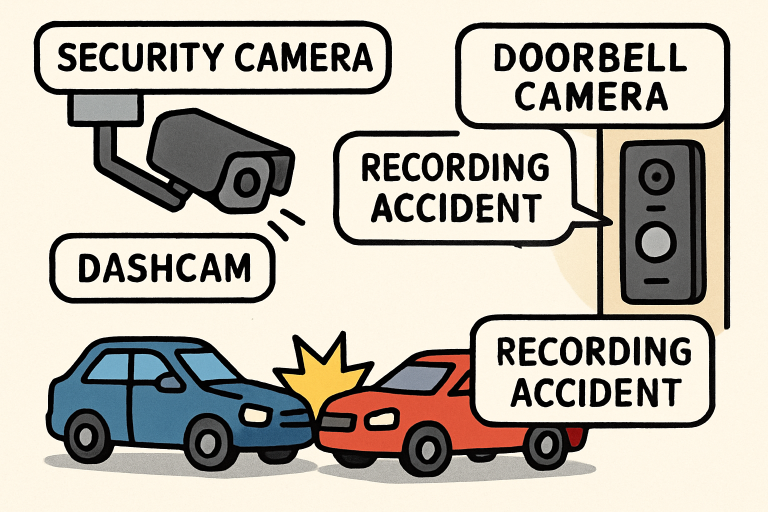
Dashcams
Dashcams are standard in commercial fleets and are increasingly common in private vehicles across Georgia. These devices continuously record traffic activity from the dashboard, capturing details from collisions, road hazards, and driver conduct. Footage can be invaluable for reconstructing accident scenarios and quickly pinpointing liability, often leading to swift settlements.
Doorbell Cameras
Doorbell cameras such as Ring or Nest often record not only people at the doorway but also street-level activity and visitors approaching the property. In residential neighborhoods, these smart devices may capture vital moments of slip-and-fall accidents, dog attacks, or delivery mishaps that would otherwise rely only on verbal testimony.
Security Cameras
Businesses and public spaces frequently utilize video surveillance. Convenience stores, apartment complexes, and parking lots are often equipped with multiple camera angles that can document accidents, assaults, or negligent maintenance claims. When an incident occurs on or near a monitored property, acquiring this video can be central to an injured party’s case.
Obtaining Surveillance Footage
Preserving crucial evidence requires a timely and strategic approach. The process starts with identifying potential sources: nearby businesses, homeowners, or municipalities with cameras facing the area where an incident occurred. Once identified, it is essential to request access to the footage as soon as possible, since recordings may only be stored for a limited time before being automatically erased or overwritten.
Property owners in Georgia do not have to hand over surveillance records unless legally compelled to do so. If an informal request is denied, the injured party’s legal counsel can initiate a formal process by issuing a subpoena or seeking a court order. This legal intervention ensures the footage is preserved as evidence, protecting the client’s right to pursue a just result.
Acting diligently and securing help from a knowledgeable attorney dramatically increases the odds of obtaining and preserving vital records that may be lost if not acted upon quickly.
Impact on Case Outcomes
- Establishing Fault: Quality video often provides an objective account of incidents that words alone cannot. By reviewing footage, both parties and the court can see exactly what occurred, leading to more accurate liability determinations.
- Corroborating Testimony: Video evidence can support or contradict witnesses’ accounts, strengthening credible narratives and exposing inconsistencies.
- Influencing Settlements: When presented with clear, undeniable evidence, insurance companies and defendants are more likely to negotiate fair settlements, reducing the need for drawn-out litigation.
In high-stakes cases, strong surveillance evidence not only expedites claims but can also encourage responsible parties to admit liability, helping victims achieve closure and recover damages more swiftly. According to experts cited by The New York Times, the increased availability of high-definition surveillance has reshaped expectations in modern injury litigation, making it almost routine for claimants to inquire about potential recordings as soon as an incident occurs.
Challenges and Considerations
- Privacy Concerns: Not every recording is fair game. Georgia law places boundaries on surveillance, particularly when filming inside private spaces or capturing audio without consent.
- Footage Quality: Many disputes arise from cameras with poor resolution or obstructed views, making some footage inadmissible or inconclusive.
- Data Retention Policies: Surveillance systems may automatically delete footage after a short period, which is why prompt action is essential.
Attorneys must also weigh the risk that the footage could reveal information damaging to the client’s case. Nevertheless, the benefits of visual evidence often outweigh these potential drawbacks when handled strategically.
Final Thoughts
Surveillance footage has dramatically shifted the personal injury landscape in Georgia by providing powerful, impartial evidence to support claims. The rise in camera coverage means that there are more opportunities than ever to clarify events, establish liability, and secure fair settlements. Acting promptly to identify and preserve relevant footage, with guidance from experienced legal counsel, is now an essential step for those seeking justice after an injury.
