

Accidents can occur unexpectedly, transforming ordinary moments into confusing and stressful situations in an instant. Victims are often left feeling overwhelmed, unsure of what steps to take next, and concerned about how to protect their legal interests. In these crucial moments, gathering on-scene evidence quickly can make the difference between a strong and a weak accident claim.
By methodically recording details at the scene, including the time, place, environment, and circumstances, accident victims help ensure that information is not lost or distorted. This evidence becomes a foundation of truth should legal action or insurance claims become necessary. Prompt evidence collection strengthens your ability to demonstrate what actually happened and helps identify who may be responsible. It enables you to recall specifics that otherwise might be forgotten or contested later on. For more insights into protecting your rights after an accident, visit BlakeFriedmanLaw.
Thorough and timely documentation is the backbone of any personal injury or accident case, serving as a reliable reference when memories fade or differing accounts emerge. The earliest evidence, collected while memories are fresh and the scene remains unchanged, can provide vital clarity when determining fault. Insurance companies and attorneys alike rely on this physical and digital evidence to reconstruct the events and accurately assess liability. Without this foundation of documentation, even the most legitimate claims can become difficult to prove, resulting in potentially unfair outcomes for the injured party.
Why Immediate Evidence Collection Matters
Timing is everything after an accident. Physical evidence can disappear rapidly as the scene is cleaned, vehicles are moved, or environmental conditions change. The integrity of key details—such as tire tracks, shattered glass, or spilled liquids—can be quickly compromised. Additionally, weather conditions may shift, lighting may change, and eyewitness recollections can fade or become muddled by stress or subsequent conversations. Swift and careful investigation not only helps prevent future incidents but also equips victims with vital information to support their claims during the aftermath.
In addition to helping establish legal and financial responsibility, gathering evidence promptly can play a valuable role in police investigations. Immediate documentation limits disputes regarding the timeline or sequence of the accident, which are common issues in accident cases. Every detail preserved at the scene can be critical when piecing together exactly what occurred. The sooner evidence is collected, the less opportunity there is for discrepancies or intentional manipulation of the scene by parties interested in avoiding blame.
Types of Evidence to Gather
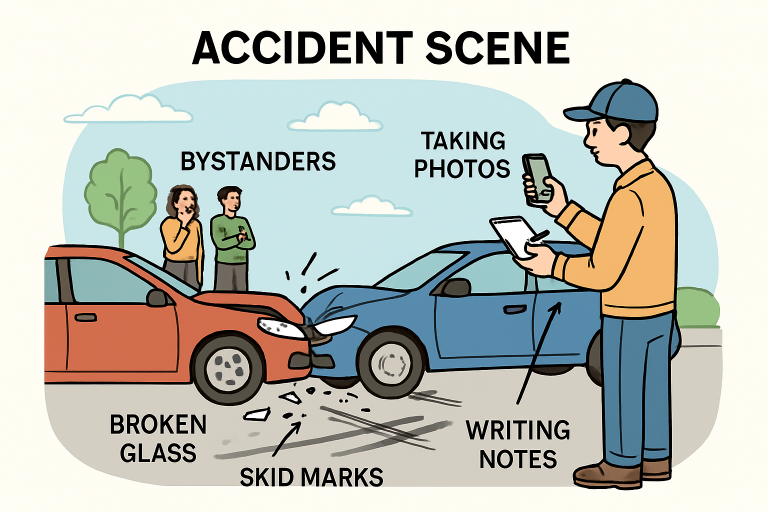
- Photographs and Videos: Take clear photos and videos from multiple angles, covering the entire scene, vehicles, equipment involved, damages, road or ground conditions, traffic signals, signage, and any visible injuries. These visual records capture information that might otherwise be missed.
- Witness Statements: Record or write down accounts from bystanders while their memories are recent and untainted. Collect their contact information so they can be reached for follow-up questions or testimony if necessary. A third-party perspective often serves as powerful confirmation of your version of events.
- Surveillance Footage: Check for cameras in the area, including those at nearby businesses, residences, or traffic lights, that might have captured the incident. Visual records from surveillance or dashcams often play a decisive role in resolving conflicting reports about what happened.
- Physical Evidence: Preserve objects tied to the accident, such as broken parts, debris, articles of clothing, or personal belongings. These can sometimes be used for forensic analysis or serve as persuasive visual aids in court, illustrating the severity or circumstances of the event.
Documenting the Scene Effectively
Accurate documentation involves more than just snapping a few pictures hastily. Use your phone or a camera to take high-resolution photos from multiple angles and distances, ensuring key elements—such as damages, injuries, skid marks, weather effects, and landmarks—are all carefully recorded. Photograph the overall scene as well as close-up shots that reveal the finer details. Always note the date and time of the accident, environmental conditions (such as rain or glare), presence of any warning signs, barriers, or signals, and whether there were obstructions in place.
Supplement photos with written or voice-recorded notes as soon as possible so you don’t rely solely on memory. Map the locations of vehicles, people, or equipment using sketches, if needed. Describing the sequence of events in your own words can provide context that is not always obvious from photographs alone. Be sure to capture anything that might clarify the dynamics of the accident, including the behavior of others involved, the presence and reactions of witnesses, and any unusual circumstances or hazards.
The Impact of Digital Evidence
With the growing reliance on technology in everyday life, digital evidence has become a critical asset in many accident claims. Emails, text messages, internal system logs, and electronic work orders may reveal prior warnings, known hazards, or repeated complaints about unsafe conditions. Because these records can be automatically overwritten, lost, or intentionally deleted, it is vital to request access to them or demand their preservation as quickly as possible.
If your vehicle, equipment, or workplace uses dashcams, body cameras, or surveillance systems, ensure that all relevant footage is immediately secured and backed up, as this form of evidence is often highly persuasive and difficult to dispute in liability cases.
Acting swiftly to preserve digital evidence helps prevent the loss of crucial information due to routine data deletion policies or system updates. Prompt action—whether on your own or with the assistance of a professional advocate—strengthens your position and supports a well-documented claim. Understanding the importance of digital records enables you to respond decisively and build your case on a comprehensive and reliable factual foundation.
Legal Considerations and Evidence Preservation
Courts and insurance companies require evidence to be obtained and preserved in a lawful manner. Never tamper with or alter evidence, as doing so can undermine your claim, damage your credibility, and even result in civil or criminal penalties. Physical evidence should be stored carefully and handled with minimal disturbance to preserve its integrity. If you are unsure how best to safeguard the material, consult with an attorney or investigator for guidance on proper evidence handling.
Legal professionals also help identify the types of documentation most valuable for the specific nature of your case, ensuring all relevant facts are collected, safeguarded, and maintained appropriately. They can send formal requests to preserve digital or surveillance data before it is deleted. Having a detailed, well-preserved evidence file significantly bolsters your ability to negotiate a fair settlement or advocate successfully in court, making your side of the story more convincing and resilient to challenge.
Conclusion
Gathering on-scene evidence is vital in protecting your rights and building a compelling accident claim, whether dealing with insurance adjusters or preparing for potential legal proceedings. Acting swiftly, documenting thoroughly, and understanding the legal significance of every detail can significantly enhance your chances of a successful resolution.
By preserving the facts, you give yourself the best possible opportunity for fair treatment in both legal and insurance proceedings, ensuring your voice is heard and your interests are defended.
