
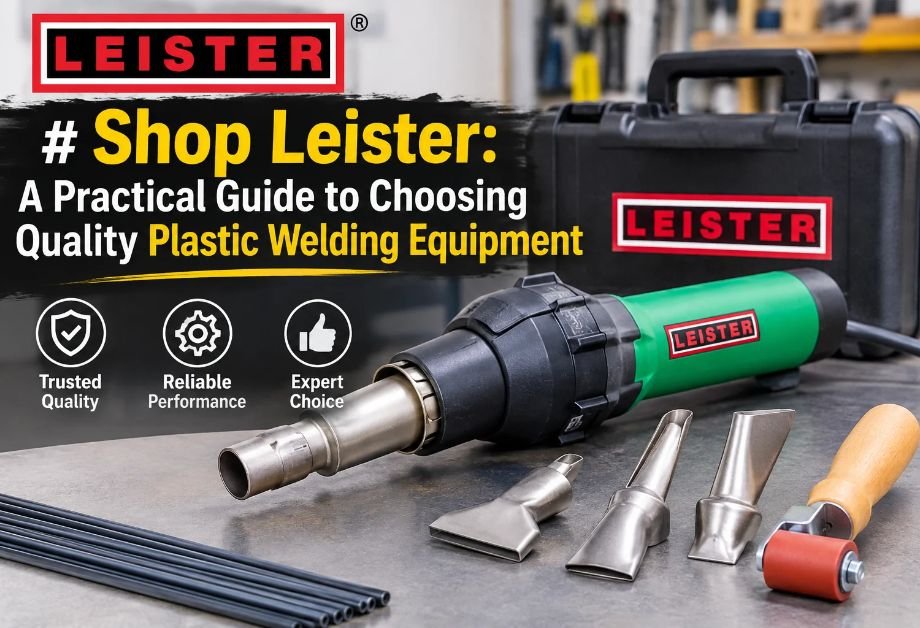
Choosing plastic welding equipment starts with the material, joint design and workload. Australian professionals planning to shop Leister should compare tools against these requirements before considering price. A suitable model, matched accessories and dependable servicing can help reduce interruptions and support consistent results across fabrication, roofing and repair work.
Understand the Equipment Your Application Needs
Handheld Hot-Air Tools
Handheld tools suit detailed fabrication, accessible repairs and finishing work where operators need manual control. The nozzle directs heated air towards the joint, while the welding technique depends on the material and application.
Consider tool weight, grip and access around the component. A comfortable tool can be easier to handle during extended tasks, but correct technique remains essential.
Automatic and Extrusion Welders
Automatic machines suit compatible seam-welding applications where controlled travel speed is useful. Check the machine’s intended materials, seam configuration and operating conditions.
Extrusion welders feed molten filler into prepared joints and are used for applications such as tanks and fabricated structures. Selection depends on material compatibility, required output and joint access.
Compare Specifications Before You Shop Leister
Before you shop Leister, prepare a brief covering the polymer, material thickness, joint type and expected hours of use. Ask the supplier to recommend models against that brief.
Temperature and Airflow Controls
Control features vary between models. Check the temperature range, adjustment method and whether airflow is independently adjustable. Do not assume every handheld tool offers the same controls or display.
A broad temperature range alone does not establish suitability. The equipment must support the settings and technique required by the welding procedure.
Accessories and Electrical Requirements
Confirm nozzle fit, filler rod dimensions and any required welding shoes or pressure rollers. For filler-based welding, verify compatibility with the base material.
Check the supplied voltage, plug configuration and site power requirements. Request an itemised quotation showing which accessories are included.
Assess Support and Ongoing Costs
Compare warranty terms, servicing arrangements, replacement parts and delivery times. Ask who handles repairs and whether commonly needed consumables are readily available.
Explore complementary welding products when planning the complete setup. Buying a tool without the necessary accessories can delay its first use.
Maintain Equipment and Check Weld Quality
Follow the model’s maintenance and cooling instructions. Inspect cables, air intakes and nozzles as directed. Prepare trial welds and assess cooled samples using the method required for the application.
Summary
Choose equipment around the job, then verify specifications, accessories and support. A clear purchasing brief makes model comparisons more useful and helps avoid unnecessary costs.
