
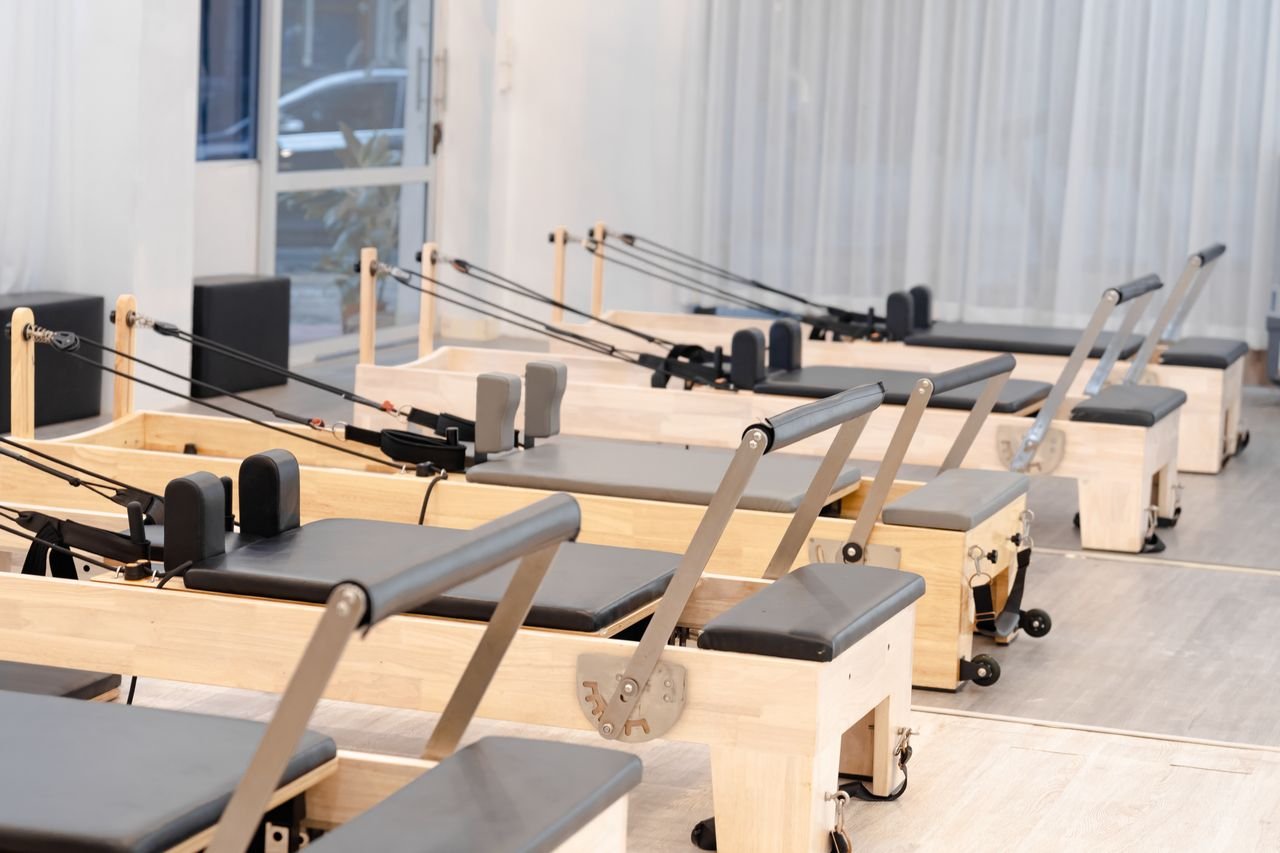
A reformer pilates machine can give users a broad range of exercise options from a single piece of equipment. By combining a sliding carriage, adjustable springs, ropes, handles and support surfaces, the machine can be used for strength, stability, mobility and controlled full-body movement. This versatility makes a reformer pilates machine particularly appealing for home users who want variety without filling a room with multiple gym stations.
Why The Reformer Feels Different From Standard Gym Equipment
A reformer pilates machine does not rely on a fixed movement path in the same way as many conventional resistance machines. The carriage moves as the user pushes or pulls, which means the exercise requires control as well as force. The springs can also change the feel of the movement by increasing resistance or providing support, depending on the exercise. This combination encourages a more deliberate style of training where balance, alignment and smooth execution matter as much as completing the repetition.
How Resistance Can Be Adjusted
The spring system is one of the most important features of a reformer pilates machine because it allows resistance to be changed without adding weight plates. Different spring combinations can create lighter or heavier tension, while body position can also influence difficulty. In some movements, stronger springs make the exercise harder, while in others they provide more stability. This means users can make small adjustments to suit different exercises, muscle groups and experience levels.
Building Lower Body Strength
A reformer pilates machine can be used to train the glutes, hamstrings, quadriceps, calves and hips through a variety of movements. Footbar presses, bridges, lunges, split-stance exercises and leg work using the straps can all be adapted through changes in spring tension and carriage position. Because the platform moves, the user often needs to stabilise the pelvis and trunk at the same time, which can make lower-body work feel more coordinated than using a fixed machine.
Using The Footbar Effectively
The footbar gives users a stable surface to push against while the carriage moves beneath them. On a reformer pilates machine, foot placement can be changed to alter the feel of an exercise, while the spring setting can be adjusted to suit the required level of resistance. Controlled movement is important during both the pushing and returning phases because allowing the carriage to move too quickly reduces precision and can make the exercise less effective.
Training The Upper Body
The ropes and handles on a reformer pilates machine can be used for pulling, pressing and rotational exercises involving the arms, shoulders, chest and back. These movements can be performed while lying, seated or kneeling, and the lack of a fixed support surface often means the torso has to remain active as well. This creates an opportunity to combine upper-body resistance with core control in the same exercise.
Why Kneeling Exercises Can Be Challenging
Kneeling on the carriage reduces the amount of external support available to the body, which can make relatively simple arm movements more demanding. A reformer pilates machine may require the user to keep the hips, spine and shoulders organised while the arms move against spring resistance. The result is an exercise that challenges more than one area at a time and encourages better awareness of how different parts of the body work together.
Core Control Is Part Of The System
A reformer pilates machine naturally encourages core involvement because many movements require the trunk to remain stable while the carriage or limbs move. The abdominal muscles may need to resist rotation, extension or shifting during planks, leg exercises, kneeling movements and standing work. Rather than treating core training as a separate activity, reformer exercise often integrates it into movements that also train the legs, arms or shoulders.
Improving Mobility With A Moving Carriage
A reformer pilates machine can support mobility by allowing the user to move through a controlled range while remaining connected to spring resistance. The straps can guide the arms or legs through different movement patterns, while the carriage provides a smooth platform beneath the body. This can make mobility work more active and controlled, particularly for exercises involving the hips and shoulders.
What Makes A Good Reformer Pilates Machine
A good reformer pilates machine should provide stable construction, smooth carriage travel, useful resistance options and enough adjustability to suit the intended user. Buyers should compare the frame, springs, carriage dimensions, rope system, footbar settings and warranty rather than focusing on appearance alone. A suitable reformer pilates machine should also fit comfortably within the available training space and provide access to replacement components if they are needed later.
Frame Quality
The frame provides the foundation for every exercise performed on a reformer pilates machine and should remain steady when the user pushes, pulls or changes position. Timber, aluminium and steel can all work well when the construction is solid and the joints are secure. Buyers should pay attention to overall rigidity and build quality because a frame that flexes or shifts can reduce confidence during more demanding movements.
Carriage Travel
The carriage should glide smoothly along the rails and provide enough movement range for the user’s height. A reformer pilates machine with limited travel may feel restrictive during exercises that require full leg extension, especially for taller users. Carriage width and padding can also influence comfort, so buyers should compare usable dimensions rather than relying only on the overall size of the machine.
Spring Selection
A reformer pilates machine should offer enough spring combinations to create gradual changes in resistance. Different exercises may require different levels of tension, so a useful system should not force the user to choose between settings that are too light or too heavy. Buyers should also check whether replacement springs are easy to obtain because springs are mechanical components that can wear over time.
Why Adjustment Options Matter
A reformer pilates machine is more versatile when the footbar, ropes, headrest and other support points can be adjusted to suit different users and exercises. Multiple footbar positions can change the starting angle of an exercise, while rope adjustments help accommodate different arm and leg lengths. These features can be particularly useful when more than one person will use the same machine.
Planning The Space Before Buying
A reformer pilates machine requires enough room not only for the frame but also for the movements performed around it. Users may need extra clearance for straps, side-facing exercises and safe access to the carriage. Doorways, corridors and stairs should also be measured before purchase because delivery packages can be larger than the assembled equipment. Buyers should consider both the final training area and the route the machine will need to travel to get there.
Choosing Between Permanent And Foldable Setup
A permanently assembled reformer pilates machine can be more convenient for regular use because there is no need to set it up before each session. In smaller homes, a folding or movable design may be more practical, but the storage process should be easy enough to repeat regularly. A machine that is difficult to move may become less useful over time, even if it saves space when not in use.
Accessories That Can Add More Exercise Options
A reformer pilates machine can become even more versatile when accessories are added. A sitting box can support seated, prone and side-lying exercises, while a jumpboard can introduce controlled jumping movements. Platform extenders can provide additional standing space, and smaller props such as rings or balls can add variety. Buyers should check which accessories are included because this can affect the overall value of the package.
Sitting Box Exercises
A sitting box changes the user’s position relative to the carriage and straps, making it useful for rowing, abdominal work and side exercises. It can also make some movements more comfortable by providing a higher or broader support surface. The box should fit securely on the reformer pilates machine and remain stable throughout the exercise.
Jumpboard Work
A jumpboard creates a larger surface at the front of the reformer pilates machine and allows users to perform repeated pushing or jumping movements while lying on the carriage. This can increase lower-body intensity and add variety to a workout without requiring repeated impact against the floor. The spring setting should allow the user to control both the push and the return of the carriage.
Home Machines And Studio Equipment
A home reformer pilates machine may be designed with portability, storage and affordability in mind, while commercial machines are generally built for frequent use by multiple people. Studio models may have heavier frames, more durable upholstery and faster adjustment systems. A home user who trains regularly may still prefer a more robust machine, while someone with limited space may prioritise a lighter and more compact design.
Learning The Equipment Before Adding Complexity
A reformer pilates machine can offer hundreds of possible exercises, but beginners should first learn how the springs, footbar, carriage and ropes work. Basic footwork, simple strap exercises and controlled carriage movements can help users become familiar with the equipment. Professional instruction can be valuable during the early stages, while structured online classes can provide additional variety once the fundamentals are understood.
Keeping The Reformer In Good Working Order
A reformer pilates machine should be cleaned and inspected regularly to maintain smooth performance. Rails should be kept free from dust and debris, upholstery should be cleaned with appropriate products and springs should be checked for wear or corrosion. Ropes, loops, clips and adjustment mechanisms should also be inspected periodically, while loose bolts or fittings should be addressed according to the manufacturer’s instructions.
Getting More Value From Regular Use
The value of a reformer pilates machine comes from how consistently it is used rather than how many features it has. Keeping the machine accessible can make regular training easier, while gradual progression can come through improved movement quality, stronger resistance, better balance or increased mobility. Users do not need to chase maximum difficulty in every session because better control and smoother technique are also important signs of improvement.
Frequently Asked Questions
What does a reformer pilates machine help train? A reformer pilates machine can be used for strength, mobility, balance, core control and coordinated full-body exercise.
Is a reformer pilates machine good for beginners? Yes, beginners can use the equipment when the exercises and spring settings are suitable for their level.
How much room does a reformer require? The exact amount depends on the model, but users should allow additional space around the frame for straps, side exercises and safe access.
Can a reformer pilates machine train the whole body? Yes, the machine can be used for lower-body, upper-body, core and mobility exercises within the same session.
Can reformer training build strength without heavy weights? Yes, spring resistance and body position can create significant muscular demand without conventional weight stacks.
Is lighter spring resistance always easier? No, lighter resistance can sometimes make the carriage less stable and require more control.
Can tall users use a reformer pilates machine comfortably? Yes, but they should compare carriage travel, rope length and adjustment range before buying.
Do you need a jumpboard to use a reformer? No, a jumpboard is optional and mainly adds additional lower-body and conditioning exercises.
Can a reformer pilates machine be kept in a small room? Yes, depending on the model and available space, although users should still allow enough clearance around the frame.
How often should the machine be checked for wear? Springs, ropes, rails, clips and adjustment points should be inspected regularly according to the manufacturer’s recommendations.
Can several people use the same reformer pilates machine? Yes, provided the machine has enough adjustment to suit each person’s height and training needs.
What features should matter most when buying? Frame stability, carriage smoothness, resistance range, adjustability, user fit and access to replacement parts are among the most important considerations.
READ ALSO: How a Search Engine Optimization Company Builds Long-Term Authority in an AI-Driven SERP
