
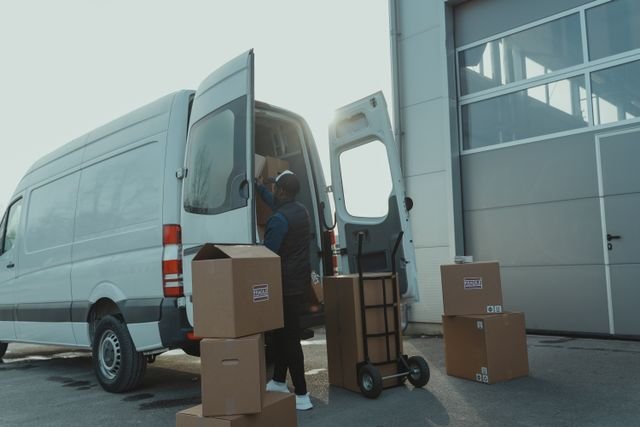
Calculating the cost of a commercial move is more complicated than determining the price of a typical household relocation. Businesses often have larger inventories, specialized equipment, tighter schedules, and several people or contractors involved in the process.
Therefore, an initial estimate can change if important details are not identified before moving day. Three challenges are particularly common when preparing a commercial moving budget.
Accurately assessing the volume and type of items
One of the first difficulties is determining exactly what needs to be moved. A commercial property may contain office furniture, computers, documents, stock, machinery, shelving, kitchen equipment, or other specialized items. The number and type of items directly influence the amount of labor, packing materials, vehicle space, and equipment required.
- For instance, relocating a small office with desks and chairs is relatively straightforward. However, a restaurant, retail store, or warehouse can be considerably more complicated because some items may be bulky, fragile, heavy, or difficult to disassemble.
Businesses may underestimate their actual inventory, especially when storage rooms, archives, supply areas, and seasonal stock are included. An inventory or an in-person assessment by professional movers https://plusonemoving.ca/kitchener/commercial-moving
is generally required for a more accurate estimate rather than relying only on a rough description of the premises.
Account for access and building restrictions
Physical conditions at the current and new locations can significantly impact costs. Commercial buildings may have loading docks, elevators, narrow corridors, stairs, restricted parking, security procedures, or specific delivery hours.
- For instance, if movers cannot park close to the entrance, employees may need to carry items over a longer distance. If a building requires the use of a freight elevator, the move must be scheduled around its availability. Some properties may also require advance booking, certificates of insurance, security arrangements, or coordination with building management.
These factors can increase labor time and require additional equipment. They are easy to overlook when an estimate is based only on the number of desks, boxes, or pieces of equipment being moved.
Estimating the cost of downtime and specialized requirements
Commercial moves often have stricter time constraints than residential relocations.
- For example, a business may need to complete the move on a weekend or outside of normal operating hours to minimize disruption. Evening, overnight, or weekend work can increase labor costs.
- Specialized equipment can create another source of uncertainty. Servers, sensitive electronics, commercial kitchen equipment, medical devices, machinery, and large fixtures may require specialized packing, handling, transportation, and installation. Disassembly and reassembly can also increase the required time.
- Additional services may be required, such as packing, temporary storage, furniture assembly, disposal of unwanted items, or equipment setup. If these services are not identified when the initial estimate is prepared, they can result in extra charges.
For this reason, a commercial moving estimate should account for more than just the volume of goods. The inventory, access conditions, schedule, building requirements, labor, equipment, and additional services should all be assessed before the business commits to a budget. A detailed site assessment and written quote can clarify the expected costs and reduce the likelihood of unexpected expenses during relocation.
