
You might be feeling a little guilty every time you remind your child to brush, and they roll their eyes, or when you schedule another filling and wonder if you are missing something about their dental care. Fairfield family dentistry understands that it can feel as if you are always reacting. A cavity here, a toothache there, one more surprise bill that you did not plan for. You want your family to be healthy, yet oral health often slips to the bottom of a long list.
Then there is the “after” you hope for. A home where brushing and flossing are just part of the routine, where dental visits are calm, quick, and mostly preventive, and where you are not holding your breath waiting for the dentist to say, “We found a problem.” Education is what moves you from that anxious “before” to a more confident “after.” When you understand how teeth really stay healthy, and when your children understand it too, you stop guessing and start making choices that actually protect them.
This is what education in family dental wellness programs is really about. It is less about lectures and more about giving every person in your home simple, clear tools to use every day. You learn what causes disease, what truly helps, what is just marketing, and how a trusted family dentist can be a coach instead of just the person who fixes things when they break.
Why does family dental education feel so confusing and overwhelming?
It often starts small. A skipped brushing on a busy night. Juice in the sippy cup because water feels like a fight. A teen who snacks late and says they are too tired to brush. None of these choices seems serious at the moment. Yet over time, habits form, and you see the results on the X-rays at your next visit.
Because of this slow build, you might feel frustrated. You are trying. You buy the toothpaste, you book the appointments, you remind and nag. Still, your child gets another cavity, or the hygienist says there is more plaque than last time. You might even feel judged, as if you are failing at something that “should” be simple.
On top of the emotional strain, there is the financial side. Preventable dental disease is expensive. Fillings, crowns, extractions, and orthodontic issues made worse by decay, missed school days, and missed workdays for you. Many families only see their dentist when something hurts, which often means the problem has already grown more complex and more costly. So where does that leave you?
This is where the role of education in family oral health programs becomes powerful. Education is not about perfection. It is about clarity. When your dentist and their team take time to explain cause and effect in simple language, you start to see the pattern. For example, you understand that frequent “little” sugar exposures, like gummy snacks or sweet drinks throughout the day, do more harm than an occasional dessert with a meal. You realize that brushing technique and timing are just as important as how often you brush.
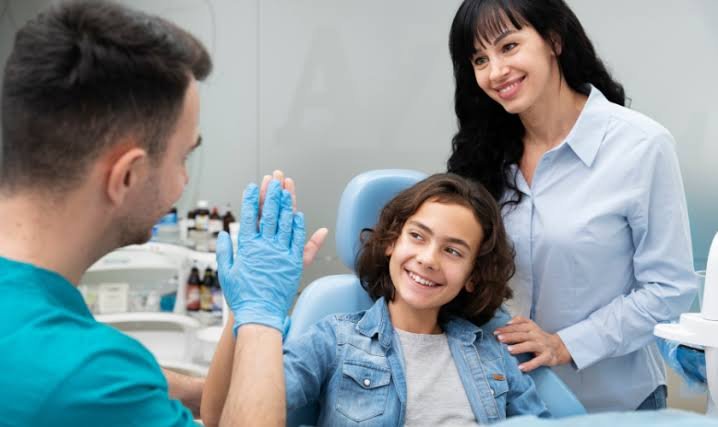
Imagine a different scenario. Your child sits in the chair, and the hygienist shows them a simple plaque-disclosing tablet, so they can see the colored spots where brushing is missed. They turn it into a game. They teach your child how to angle the brush, how long to spend on each area, and how to clean around braces or tight spaces. You watch, you ask questions, and you both leave with a shared plan instead of a vague “try to do better.” That is education working in real time.
There are also high-quality, free resources that can support what your family dentist explains. For example, the Health Resources and Services Administration offers a helpful oral health toolkit, oral health teaching tools, and oral health resources for families
What actually changes when a family dentist focuses on education?
When a family dentist builds education into every visit, small but important shifts happen. Children begin to see teeth as something they can control, not just something adults fuss about. Parents feel more confident saying “no” to constant snacking or sugary drinks, because they understand the “why” behind it. Teenagers who might roll their eyes at you may still listen when a professional shows them how vaping, soda, or poor brushing is already changing their gums or enamel.
There is also a deeper emotional impact. Dental fear often comes from not knowing what is happening. When your family dentist explains what they are doing, what they see, and what you can do at home, the chair feels less scary. Your child is less likely to associate the dentist with pain and more with coaching, encouragement, and clear next steps.
Financially, education pays off as well. Preventive care is almost always less expensive than treatment. When your family understands and follows a simple plan, you are more likely to catch early signs of trouble, come in for regular cleanings, and avoid many emergency visits. A strong family dental care program is built around prevention, and prevention is built on education.
How do “reactive” and “education-focused” family dental programs compare?
It can help to see the difference in black and white. Here is a simple comparison between a reactive approach and an education-centered program with a trusted family dentist.
| Approach | What It Looks Like At Home | Impact On Your Family | Long-Term Cost Trend |
|---|---|---|---|
| Reactive care (treat problems only) | Brush “when you remember.” Visits are mostly when there is pain or visible decay. Little time spent on questions or teaching. | More emergencies, higher anxiety, kids associate the dentist with pain, parents feel guilty and confused. | Higher. More fillings, extractions, and complex treatments over time. |
| Education-focused family program | Clear home routine. Regular checkups with time for questions. Dentist and team coach for both parents and kids. | Fewer surprises, more confidence, kids build lifelong habits, less fear during visits. | Lower over time. More preventive cleanings and fewer major procedures. |
Seeing these differences, you can start to ask yourself which pattern looks more like your current reality and which one you want to move toward.
What can you start doing right now to strengthen your family’s dental wellness?
You do not need to overhaul your life in a day. A few focused steps can start to change the direction of your family’s oral health.
1. Turn brushing and flossing into a shared, visible routine
Children copy what they see more than what they hear. Instead of calling out “Go brush your teeth” from another room, brush together when you can. Stand at the sink with your child. Set a two-minute timer. Show them how you reach the back teeth and along the gumline. For younger children, you can take a “your turn, my turn” approach, where they brush first, and you do a quick check and finish.
For older kids and teens, connect habits to their own goals. Clear breath for friends, a bright smile for sports photos, and fewer missed activities due to dental visits. Ask your family dentist to show them any plaque or early gum changes so they see real proof that effort matters.
2. Use your family dentist as an educator, not just a fixer
At your next visit, tell the dentist or hygienist you want more guidance, not just treatment. Ask simple questions. “What are the top two things we should focus on at home between now and the next visit?” “Do you see any early signs that we can still turn around?” “Is there anything about our diet that stands out to you?”
Bring your child into the conversation. Encourage the team to talk directly to them, not only to you. When children hear, “You are doing a good job here, and here is one thing to work on,” they feel more in control. Over time, this turns the office into a learning space, not just a place where problems are announced.
3. Build a simple, written family dental plan
It does not need to be fancy. On a sheet of paper or a note on your phone, write down three things. When and how often each person brushes and flosses. Any special needs, like fluoride toothpaste for a high cavity risk child or a mouthguard for sports. Your next scheduled checkups and cleanings.
Share this plan with your family dentist and ask for feedback. They may suggest sealants for your child’s molars, a change in brushing tools, or a different approach for a family member with braces or sensitive teeth. You can also add helpful resources to your plan, such as the HRSA toolkit or pediatric oral health guidance, so everything is in one place when you need a reminder.
Moving toward calmer, healthier family dental visits
You do not have to handle all of this perfectly to protect your family’s smiles. You only need to move from guessing to understanding. When a family dentist weaves education into every visit, and when you carry that learning into daily routines, dental care stops feeling like a series of emergencies and starts feeling like a shared project you can actually manage.
Your next step can be simple. At your upcoming appointment, speak up about wanting more education and a clearer plan. Ask questions, involve your children, and use trusted resources at home between visits. Over time, you will see fewer surprises, calmer checkups, and a growing sense that your family’s oral health is not out of your hands anymore. It is something you are actively shaping, one small, informed choice at a time.
